A quick example of typical Paraguayan hospitality.
Catherine needed some pictures for her visa so we went to a photo studio to get them. While they were being processed, the owner of the studio offered us cake and coke. Apparently our timing was impeccable because we just so happened to pick the same photo studio that was hosting a baby shower. Hence, the cake and coke.
When Cat's pictures were developed and the bill figured, the owner encouraged us to stay and take our time finishing up our unexpected--and delightful--snacks. We took her up on her hospitality and stayed an additional five or 10 minutes enjoying our treat and chatting with the owner and the woman who took Cat's picture. They were never in a rush to get rid of us and really seemed to enjoy our company. It was either that or our broken Spanish...
Saturday, March 28, 2009


Wednesday, March 18, 2009
Public Transportation: Austin vs. Asunción
I wrote this letter to the editor/article to the Austin American Statesman to highlight an Austin deficiency.
I am a Rotary Foundation Ambassadorial scholar living in the capitol city Asunción, Paraguay. It is a landlocked South American country, bordered by Argentina, Bolivia, and Brazil and it is the second poorest nation on the continent (ahead of Bolivia—the other landlocked nation). I write this to highlight a startling difference between Asunción and Austin: public transportation.
Before moving to Paraguay I lived in Austin for two and a half years on Congress and Riverside and then on 2222 and MoPac (where I will return in December when my scholarship period is over). In that time I became intimately familiar with the lack of a public transportation system. Moving from Boston, Massachusetts—where a subway system, buses, and taxis made owing a car unnecessary, even excessive—only highlighted Austin’s public transportation shortcomings.
Austin has a bus system, yes; however, it is inadequate in providing wide-ranging service to all parts of Austin and its surrounding cities. One must wait at bus stops that are few and far between for a bus that might not arrive for 20 minutes. Furthermore, the small fleet of buses serves as a reminder that much needs to be done to provide a comprehensive public transportation system. Taxis exist too, but they can be costly and difficult to find when one truly needs one.
Asunción, on the other hand, has a remarkable public transportation system. It might be the second poorest country in South America but it ranks far superior to Austin in its public transit infrastructure. Although Asunción does not have a subway or commuter-rail, its bus system more than makes up for those perceived pitfalls. Buses and bus stops are numerous and located in popular areas. Routes are plentiful. Service is fast and safe. One may take any number of buses to neighboring towns and cities or even the airport. To compliment the buses, there are an abundant number of inexpensive taxis that serve the city.
I mention these differences not to pan the city in which I live. I show them to illustrate a point. If a little-known South American city, with its significantly weaker economy and dramatically less funds, can give its residents a comprehensive public transportation system then surely Austin—a city with the money, resources, and political will—can do the same.
Furthermore, with Austin’s desire for more residents to move downtown and the increasingly ‘greener’ stance of its citizens, the city should embrace this lesson from its South American neighbor and its all-encompassing public transportation system. Increased bus and taxi service combined with a commuter-rail system (that is continually promised but continually delayed and, hence, never delivered) would dramatically improve Austin’s public transportation system. It would also give its citizens a much more viable option than they have now. Public transportation only becomes a feasible alternative to cars when it provides fast, reliable service combined with a service grid that has stops in places where people want to go.
Toll roads are not the answer. An efficient, effective public transportation infrastructure is.
The author is the recipient of a 2008-2009 Rotary Foundation Ambassadorial Scholarship, which allows him to study abroad for an academic year. He received his Bachelor’s degree in Interdisciplinary Humanities from Michigan State University and his Master’s degree in Dramatic Arts from Harvard University. He wrote this article while watching buses race down the street in front of his apartment at dizzying speeds.
I am a Rotary Foundation Ambassadorial scholar living in the capitol city Asunción, Paraguay. It is a landlocked South American country, bordered by Argentina, Bolivia, and Brazil and it is the second poorest nation on the continent (ahead of Bolivia—the other landlocked nation). I write this to highlight a startling difference between Asunción and Austin: public transportation.
Before moving to Paraguay I lived in Austin for two and a half years on Congress and Riverside and then on 2222 and MoPac (where I will return in December when my scholarship period is over). In that time I became intimately familiar with the lack of a public transportation system. Moving from Boston, Massachusetts—where a subway system, buses, and taxis made owing a car unnecessary, even excessive—only highlighted Austin’s public transportation shortcomings.
Austin has a bus system, yes; however, it is inadequate in providing wide-ranging service to all parts of Austin and its surrounding cities. One must wait at bus stops that are few and far between for a bus that might not arrive for 20 minutes. Furthermore, the small fleet of buses serves as a reminder that much needs to be done to provide a comprehensive public transportation system. Taxis exist too, but they can be costly and difficult to find when one truly needs one.
Asunción, on the other hand, has a remarkable public transportation system. It might be the second poorest country in South America but it ranks far superior to Austin in its public transit infrastructure. Although Asunción does not have a subway or commuter-rail, its bus system more than makes up for those perceived pitfalls. Buses and bus stops are numerous and located in popular areas. Routes are plentiful. Service is fast and safe. One may take any number of buses to neighboring towns and cities or even the airport. To compliment the buses, there are an abundant number of inexpensive taxis that serve the city.
I mention these differences not to pan the city in which I live. I show them to illustrate a point. If a little-known South American city, with its significantly weaker economy and dramatically less funds, can give its residents a comprehensive public transportation system then surely Austin—a city with the money, resources, and political will—can do the same.
Furthermore, with Austin’s desire for more residents to move downtown and the increasingly ‘greener’ stance of its citizens, the city should embrace this lesson from its South American neighbor and its all-encompassing public transportation system. Increased bus and taxi service combined with a commuter-rail system (that is continually promised but continually delayed and, hence, never delivered) would dramatically improve Austin’s public transportation system. It would also give its citizens a much more viable option than they have now. Public transportation only becomes a feasible alternative to cars when it provides fast, reliable service combined with a service grid that has stops in places where people want to go.
Toll roads are not the answer. An efficient, effective public transportation infrastructure is.
The author is the recipient of a 2008-2009 Rotary Foundation Ambassadorial Scholarship, which allows him to study abroad for an academic year. He received his Bachelor’s degree in Interdisciplinary Humanities from Michigan State University and his Master’s degree in Dramatic Arts from Harvard University. He wrote this article while watching buses race down the street in front of his apartment at dizzying speeds.
Sunday, March 8, 2009
Weekend Shutdown
Normally Saturday and Sunday are very busy times in the States. People flock to the stores, malls, theatres, and anywhere else they want to go because they have the time but mainly because everything is open. Stores on Saturdays generally offer extended hours to accommodate the increase in window-shopping traffic. Sundays, although generally not quite as busy as their weekend counterpart, still offer a wide variety of things to do to pass the time.
Paraguay, however, likes to take it slow on the weekend. Nothing, and I mean nothing, is open on Saturday and Sunday. Apparently, taking a day of rest is so important and cherished that Paraguayans take two. Not that I can blame them, however. It is rather nice knowing that you can relax for two straight days—whether you want to or not. In the interest of full disclosure I must mention the exceptions to the the-entire city-is-closed rule and that is the one thing directly related to the States: malls and movies. You may escape the summer heat or lack of anything else to do by visiting the mall, doing some shopping, and taking in a movie. Not a bad idea for a Saturday or Sunday afternoon.
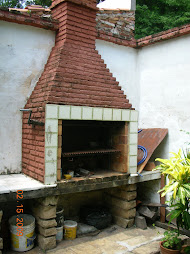
I think a big reason nothing is open on the weekends is because it is prime assado (b.b.q.) time. Most Paraguayans will wake up early to grill what seems the equivalent of a half of a cow and spend the rest of the day eating and spending time with friends. It’s quite the tradition and quite the sight. In fact, it is ubiquitous to the point that every home comes equipped with a built-in grill specifically designed for assados. With such a strong tradition of passing weekends with friends it is no wonder that the country virtually shuts down two days out of the week.
Paraguay, however, likes to take it slow on the weekend. Nothing, and I mean nothing, is open on Saturday and Sunday. Apparently, taking a day of rest is so important and cherished that Paraguayans take two. Not that I can blame them, however. It is rather nice knowing that you can relax for two straight days—whether you want to or not. In the interest of full disclosure I must mention the exceptions to the the-entire city-is-closed rule and that is the one thing directly related to the States: malls and movies. You may escape the summer heat or lack of anything else to do by visiting the mall, doing some shopping, and taking in a movie. Not a bad idea for a Saturday or Sunday afternoon.
I think a big reason nothing is open on the weekends is because it is prime assado (b.b.q.) time. Most Paraguayans will wake up early to grill what seems the equivalent of a half of a cow and spend the rest of the day eating and spending time with friends. It’s quite the tradition and quite the sight. In fact, it is ubiquitous to the point that every home comes equipped with a built-in grill specifically designed for assados. With such a strong tradition of passing weekends with friends it is no wonder that the country virtually shuts down two days out of the week.
Thursday, February 26, 2009
Rotary Meetings in Asunción
Yesterday Catherine and I attended our first Rotary meeting for Rotary Club Asunción – Catedral (district 4840). It was held in Hotel Chaco from 7:30 to 8:30 am. Breakfast included a delicious mixed fruit bowl, fresh-squeezed juice (of which Cat and I are not entirely sure), coffee, and bread with assorted jams.
While we ate and waited for the meeting to begin, we talked as best we could with some members. We learned that one member was visiting from Miami (small world) and another has a sister who lives in Holland, Michigan (even smaller world considering Holland is not far from where I grew up). They both spoke English, which was nice, but Cat and I only resorted to it when it was absolutely necessary. For the most part we got along with our limited Spanish.
I observed several differences between this club and the Austin, Oak-Hill club. First, this club only has about 15 members compared to the 35 or more members I am used to seeing. Second, there was no guest speaker. Instead, the president would talk about a topic and when he finished other members would comment on it or add something relevant to the discussion. From what I could understand they talked a lot about past and upcoming events as well as various things going on with other Rotary clubs. Third, because of their jobs and, I imagine, the time of the meeting some of the members had to leave early. I do not recall this occurring in the States; however, I’ve only ever been to meetings during lunchtime, which, based on the U.S. work schedule, makes it easier to stay the entire hour. Fourth, there was no reciting of the four way test.* These are but mere small observational differences between Rotary clubs of the States and Paraguay. I believe that in no way do these differences undermine the common goal of each club to help others.
Although I observed differences I did notice some important similarities. First, the president rang the bell to begin and end the meeting. Second, and most importantly, despite the fact that I did not understand everything that was being talked about, what I did understand reinforced the idea that Rotary: no matter where it is in the world or what district it is, Rotary genuinely cares about helping others. I could identify that thread running through every discussion, every comment. Cat and I could feel willingness to help and the passion with which each member spoke. It was a great feeling.
I gave a short presentation on my thoughts about Paraguay and its people. I said that I admired the more relaxed attitude people had here. It is not like the States where time is money and if you’re not constantly going, going, going then you are somehow failing to ‘make it’ or achieve success. In the States, relaxing and taking the time to enjoy life’s little pleasures is not seen as a positive. Three-hour dinners and two-hour siestas are unthinkable. The prevailing thought is “who has the time?” If you make time then you will have the time. It sounds overly simplistic but it’s true. Where we place our priorities is where we devote the most time.
My comments sparked a little chuckle from a few members. One even said that Paraguayans might have more time but a lot less money. To which I replied that there is no point to having a ton of money if one cannot enjoy it because he or she is too busy. Additionally, I asked him, what is the point of money if you have no one to share it and enjoy it with? Money is an object that comes and goes, but true friends and family will be by your side forever. (Cat later told me that as I said this she looked around the room and could tell that everyone was very interested in what I had to say.)
I also mentioned how delicious the food is here, especially the only non-soup soup I have ever eaten, sopa Paraguaya (literally Paraguayan soup, which has the consistency of cornbread but is much tastier). Everyone laughed at that.
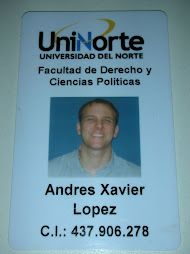
The Rotarians were impressed that I am attending classes at the Universidad del Norte (UniNorte). I told them that at first I was going to study Advertising but then switched to International Relations and Commerce. After reading over the description of each major and some of the classes, the latter major sounded much more interesting. And, as an unforeseen bonus, one of my first classes is Spanish Grammar. After seeing that, the choice was easy.
* Rotary's four-way test of things we think, say, or do:
1. Is it the TRUTH?
2. Is it FAIR to all concerned?
3. Will it build GOODWILL and BETTER FRIENDSHIPS?
4. Will it be BENEFICIAL to all concerned?
While we ate and waited for the meeting to begin, we talked as best we could with some members. We learned that one member was visiting from Miami (small world) and another has a sister who lives in Holland, Michigan (even smaller world considering Holland is not far from where I grew up). They both spoke English, which was nice, but Cat and I only resorted to it when it was absolutely necessary. For the most part we got along with our limited Spanish.
I observed several differences between this club and the Austin, Oak-Hill club. First, this club only has about 15 members compared to the 35 or more members I am used to seeing. Second, there was no guest speaker. Instead, the president would talk about a topic and when he finished other members would comment on it or add something relevant to the discussion. From what I could understand they talked a lot about past and upcoming events as well as various things going on with other Rotary clubs. Third, because of their jobs and, I imagine, the time of the meeting some of the members had to leave early. I do not recall this occurring in the States; however, I’ve only ever been to meetings during lunchtime, which, based on the U.S. work schedule, makes it easier to stay the entire hour. Fourth, there was no reciting of the four way test.* These are but mere small observational differences between Rotary clubs of the States and Paraguay. I believe that in no way do these differences undermine the common goal of each club to help others.
Although I observed differences I did notice some important similarities. First, the president rang the bell to begin and end the meeting. Second, and most importantly, despite the fact that I did not understand everything that was being talked about, what I did understand reinforced the idea that Rotary: no matter where it is in the world or what district it is, Rotary genuinely cares about helping others. I could identify that thread running through every discussion, every comment. Cat and I could feel willingness to help and the passion with which each member spoke. It was a great feeling.
I gave a short presentation on my thoughts about Paraguay and its people. I said that I admired the more relaxed attitude people had here. It is not like the States where time is money and if you’re not constantly going, going, going then you are somehow failing to ‘make it’ or achieve success. In the States, relaxing and taking the time to enjoy life’s little pleasures is not seen as a positive. Three-hour dinners and two-hour siestas are unthinkable. The prevailing thought is “who has the time?” If you make time then you will have the time. It sounds overly simplistic but it’s true. Where we place our priorities is where we devote the most time.
My comments sparked a little chuckle from a few members. One even said that Paraguayans might have more time but a lot less money. To which I replied that there is no point to having a ton of money if one cannot enjoy it because he or she is too busy. Additionally, I asked him, what is the point of money if you have no one to share it and enjoy it with? Money is an object that comes and goes, but true friends and family will be by your side forever. (Cat later told me that as I said this she looked around the room and could tell that everyone was very interested in what I had to say.)
I also mentioned how delicious the food is here, especially the only non-soup soup I have ever eaten, sopa Paraguaya (literally Paraguayan soup, which has the consistency of cornbread but is much tastier). Everyone laughed at that.
The Rotarians were impressed that I am attending classes at the Universidad del Norte (UniNorte). I told them that at first I was going to study Advertising but then switched to International Relations and Commerce. After reading over the description of each major and some of the classes, the latter major sounded much more interesting. And, as an unforeseen bonus, one of my first classes is Spanish Grammar. After seeing that, the choice was easy.
* Rotary's four-way test of things we think, say, or do:
1. Is it the TRUTH?
2. Is it FAIR to all concerned?
3. Will it build GOODWILL and BETTER FRIENDSHIPS?
4. Will it be BENEFICIAL to all concerned?
Friday, February 20, 2009
The Golden Arches
This goes without saying (but I’m going to say it anyway…) that a McDonald’s restaurant can be found the world over, and Asunción is no exception. There is one about 7 blocks from our homestay and another one a short distance from our apartment. When I was in Acapulco, Méxio in 2002, I saw a McDonald’s with a plaque that stated that that particular restaurant was the 15,000th McDonald’s in the world. I wonder what numbers the two in Asunción are?
I know that every restaurant must follow the same guidelines and protocol designated by the home base in Oak Brook, Illinois. Each building’s design must be roughly the same shape and size, the menus need to look similar, the same foods must be offered, the packaging needs to be uniform. It is the corporation’s intention that every time someone walks into a McDonald’s, no matter where that person is in the world, that he or she feels like it’s his or her hometown McDonald’s. Everything is planned to meet such a high standard of uniformity that even the smells are the same. In fact, every time Cat and I pass by our neighborhood McDonald’s on our daily walk, we catch a whiff of that unmistakable McDonald’s french fry smell. If you happen to like Mickey D fries, which we do, then you are in luck. Although we haven’t ventured into a McDonald’s yet, we plan on doing so when we become nostalgic for some greasy, fat laden, good, old-fashioned American fast food.
Apart from the ubiquitous Golden Arches and red and yellow colors there are three things I noticed about Asunción McDonald’s that might be difficult to find in the Sates. The first relates more to nomenclature than it does a radical departure from the standard restaurant. And that is the drive thru, or as it’s referred to in Paraguay, the auto-mac—a rather clever translation that works in any language.
The second difference is the Mcdonald’s here come with outdoor patios where you can enjoy your quarter pounder amidst the hustle-and-bustle of everyday Asunción life. And, despite the summer heat and humidity, many patrons take advantage of the outdoor seating.
The third, and I think most intriguing, difference is the McEntrega, or delivery. Entregar means ‘to give’ or ‘to hand over’. Therefore, the delivery system is quite literally handing over the meal. That’s right. If a ‘mac attack’ hits you just as your favorite program is starting, you don’t have to worry. Just call your local McDonald’s and have it delivered. However, most people take advantage of McEntrega because they do not have cars themselves. In the parking lot, you will find anywhere from three to 10 scooters equipped with what look like oversized pizza delivery boxes strapped to the back. The concept must be working because every time Cat and I walk past a McDonald’s we see a McEntrega scooter either coming or going. I cannot attest to the freshness or quality of the delivery service but I must admit that I am intrigued and am half-tempted to try it one of these days.
Ray Croc was once asked how he liked the hamburger business. He replied that he wasn’t in the hamburger business at all. Puzzled, the interviewer then asked him what business he was in, to which Mr. Croc replied that he was in the real estate business. This philosophy certainly holds true in Asunción where, even with the addition of added bonuses like a delivery service and outdoor patio, every McDonald’s restaurant is situated in a prime real estate location.
I know that every restaurant must follow the same guidelines and protocol designated by the home base in Oak Brook, Illinois. Each building’s design must be roughly the same shape and size, the menus need to look similar, the same foods must be offered, the packaging needs to be uniform. It is the corporation’s intention that every time someone walks into a McDonald’s, no matter where that person is in the world, that he or she feels like it’s his or her hometown McDonald’s. Everything is planned to meet such a high standard of uniformity that even the smells are the same. In fact, every time Cat and I pass by our neighborhood McDonald’s on our daily walk, we catch a whiff of that unmistakable McDonald’s french fry smell. If you happen to like Mickey D fries, which we do, then you are in luck. Although we haven’t ventured into a McDonald’s yet, we plan on doing so when we become nostalgic for some greasy, fat laden, good, old-fashioned American fast food.
Apart from the ubiquitous Golden Arches and red and yellow colors there are three things I noticed about Asunción McDonald’s that might be difficult to find in the Sates. The first relates more to nomenclature than it does a radical departure from the standard restaurant. And that is the drive thru, or as it’s referred to in Paraguay, the auto-mac—a rather clever translation that works in any language.
The second difference is the Mcdonald’s here come with outdoor patios where you can enjoy your quarter pounder amidst the hustle-and-bustle of everyday Asunción life. And, despite the summer heat and humidity, many patrons take advantage of the outdoor seating.
The third, and I think most intriguing, difference is the McEntrega, or delivery. Entregar means ‘to give’ or ‘to hand over’. Therefore, the delivery system is quite literally handing over the meal. That’s right. If a ‘mac attack’ hits you just as your favorite program is starting, you don’t have to worry. Just call your local McDonald’s and have it delivered. However, most people take advantage of McEntrega because they do not have cars themselves. In the parking lot, you will find anywhere from three to 10 scooters equipped with what look like oversized pizza delivery boxes strapped to the back. The concept must be working because every time Cat and I walk past a McDonald’s we see a McEntrega scooter either coming or going. I cannot attest to the freshness or quality of the delivery service but I must admit that I am intrigued and am half-tempted to try it one of these days.
Ray Croc was once asked how he liked the hamburger business. He replied that he wasn’t in the hamburger business at all. Puzzled, the interviewer then asked him what business he was in, to which Mr. Croc replied that he was in the real estate business. This philosophy certainly holds true in Asunción where, even with the addition of added bonuses like a delivery service and outdoor patio, every McDonald’s restaurant is situated in a prime real estate location.
Tuesday, February 17, 2009
Sim Cards & Banda Ancha
Cat and I are in our last week of intensive Spanish classes. It seems like forever ago when we started. We've been progressing poco a poco (little by little) to the point where we can sometimes, sorta understand what's going on. One big accomplishment that made us feel good about our Spanish is when we got a new sim card for our cell phone. I will admit that the person who helped us needed to repeat himself a few times but we finally got a cell. (Now all that's left to do is figure out how to make international calls on it.)
Our next big test will be when we try to get banda ancha (wide band) mobile internet for our laptop. Since internet cafes can get expensive--even at a mere 5000 Gs an hour ($1/hr.)--we figured out that this would be more cost effective. As before, we must put our Spanish to the test and see if we can walk away with mobile internet. Results to follow...
Our next big test will be when we try to get banda ancha (wide band) mobile internet for our laptop. Since internet cafes can get expensive--even at a mere 5000 Gs an hour ($1/hr.)--we figured out that this would be more cost effective. As before, we must put our Spanish to the test and see if we can walk away with mobile internet. Results to follow...
Subscribe to:
Posts (Atom)


.JPG)





.JPG)
.JPG)